New Year, Same Me
My first post of 2026, including some thoughts on New Year's Resolutions as well as sharing my first piece of creative writing of the year.

Welcome to all my new subsribers. There have been so many of you in the last six weeks, in the main due to Caroline Danks’s recommendation. I’m at 93 now (I was at 38 in Novembr 2025). Today I’ll share my first post of the year, in advance of mine and Becky’s creative writing session which is scheduled for tomorrow.
But first, some reflections on New Year’s Resolutions.
Yesterday, my daughter (13) told me it was the official day that 80% of us give up on our New Year’s Resolutions, and it got me thinking about the why, and also about my own 2026 goals. Why do we set ourselves up to fail? Are we too ambitious? Are we making the wrong goals? “I want to run a marathon, rather than “I want to incorporate running into my weekly schedule”, for example. What is going on here at a deeper level?
I’m not really one for New Year’s Resolutions - probably because I’m too scared about failing - but as an avid planner, I do like to think about the year ahead and what I’d like to change/improve/keep the same/drop, without making official plans that I tell people about. This year, most of my Year Ahead Musings seemed to focus on work and creative writing (which, ultimately, loops back to my day job as a fundraiser). For those of you who connect with me on LinkedIn, you’ll know I got a promotion at the start of the year. This is the culmination of three years of hard graft to get to where I want to be personally and professionally and I’m both excited and daunted by my new role as Head of Strategic Fundraising for OSCAR’s Charity (we support anyone in the UK affected by a childhood brain tumour diagnosis).
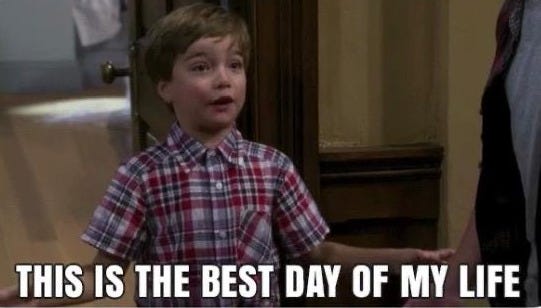
When I think about the year ahead for work, I feel like this and this, almost simultaneously:

As someone who enjoys finding out the “why”, I spent quite a bit of time (arguably too much time) thinking about why my goals were focussed mainly on work. Am I turning into an official workaholic? (I’ve always been an unofficial one). Am I prioritising the wrong thing in my life? It then struck me that I’m pretty happy with where I’m at in my personal life. I get time to enjoy my hobbies (knitting, yoga, swimming, gardening, cooking and, of course, writing) I enjoy lots of quality time with my family (husband, two kids and mum), we’re lucky to live in a beautiful part of the world (Devon) and most of last year was spent renovating our house into something we feel hugely proud to call our home. This reflection helped me to understand why my 2026 plans felt focussed towards work. My targets are ambitious, my work load is full, my determination is high. So naturally, work comes to the top.
This reflection segways nicely into the creative writing section of this post. I love writing about the work that our little charity does, the impact we have across the UK, the changes we’re campaigning for, the lives we reach. I also find that I’m often gripped with a deep desire to scream and shout about the importance of our work, and am often left feeling like I haven’t been able to capture the urgency, the gravity, or the immense gap in provision for families navigating a childhood brain tumour diagnosis. It leaves me feeling frustrated.
A word of warning : the next section covers grief. Some of you may find this triggering so please tread kindly and carefully.
So when I was reading Margret Geraghty’s activity on Writing with Colour, the colour that immediately struck me was black. Black for the grief a family feels when they lose a child, black for the grief a child feels when they lose the ability to walk following surgery and treatment, black for the grief a family friend feels as they watch their loved ones’ lives change forever.
Margret Geraghty tells us:
“Colours are rich in symbolic value and cultural meanings….. All colours are capable of activating our senses in ways we may not always be consciously aware of. Yellow, for example, is a fun colour - the food industry often uses it for the packaging of snack food and products aimed at children.
Red is exciting.
Green is calming.”
She then goes on to discuss basic colour psychology, informing us that the names used to describe colours are often just as important as the colours themselves. She encourages us to pick up a paint catalogue and notice how a chocolate brown is called “Indulgence”. By the same token, colour names in fiction are powerful tools for shaping the reader’s experience and helping to create a specific image. Gravy-brown, for instance, does not evoke the same image as coffee-brown.
After citing a few paragraphs from Gillian White’s Night Visitor, Geraghty sets us to work. She asks us to choose one of the following emotions:
happiness
sadness
love
nostalgia
anger
hope
fear
boredom
hatred
dislike
She then tasks us to choose a setting (outdoor or indoor) and write a piece describing our chosen setting from the point of view of a character who is feeling your chosen emotion, making sure to include lots of colour, tailoring the colour descriptions to suit the emotion.
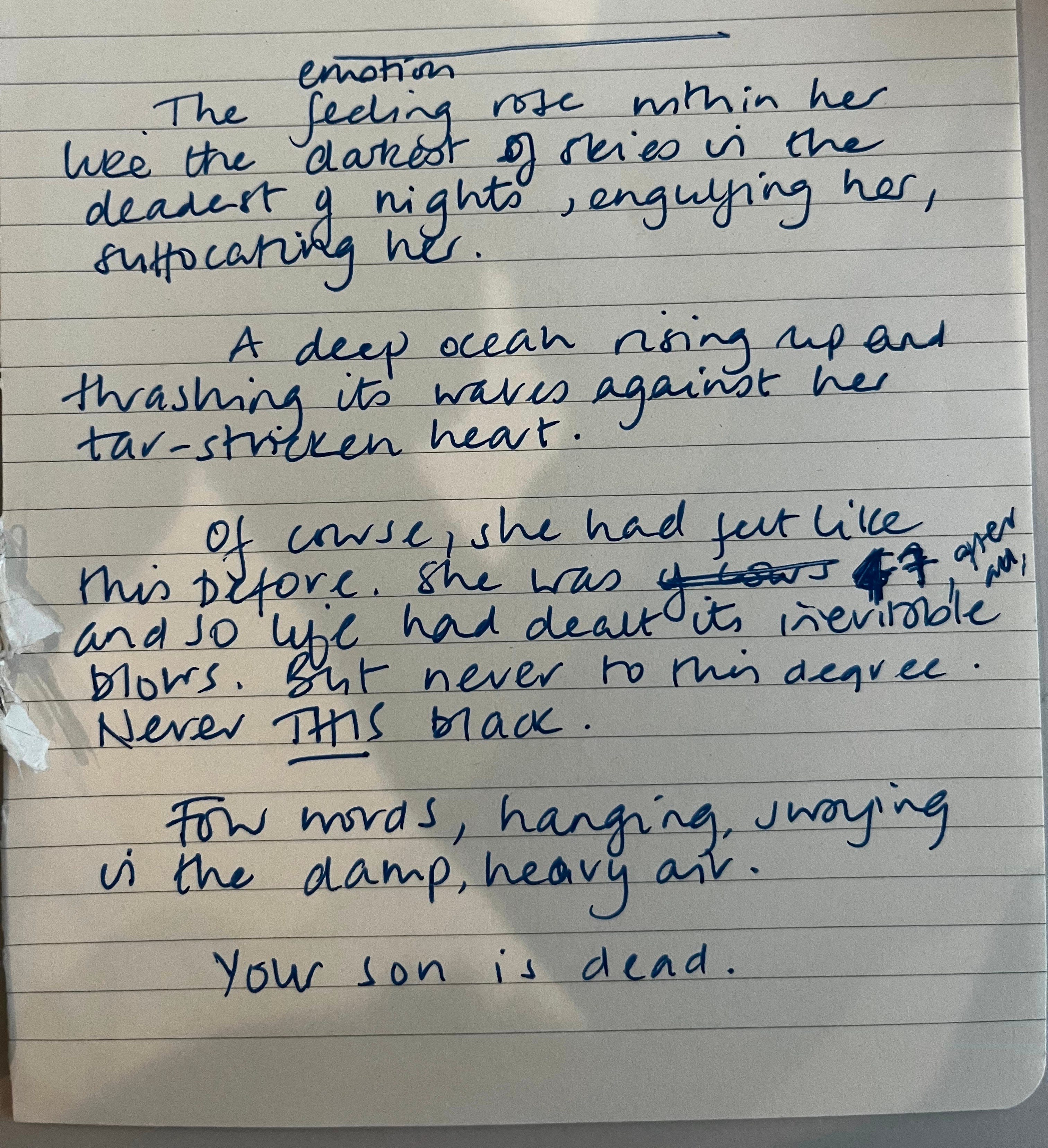
I’m not sure if I managed to fit the brief, but choosing the emotion grief (not on the list of emotions, I realise), I found myself writing two pieces. I probably, subconsciously, took inspiration from our wonderful Chair of Trustees, Marie Hughes, Oscar’s mum when she wrote her latest blog last week. It moved many of us and I’m sure it will touch you too (again, a gentle warning, she is talking about grief).
I have not lost a child so I cannot know what it is like to be in Marie’s shoes. However, it is something I think about often, and one of the things I find hardest to process in our charity’s work. When a child dies who we are working with, it hits us all. My writing today came from the emotion I feel when I learn about a grieving family following the loss of their child. I cannot imagine anything coming close to that level of loss.
This is not a cheery piece of writing, but one that I felt compelled to write and one that I hope will help me get bolder with the writing I include in my funding applications, because whilst it’s desperate, it’s also hugely important that we share the voices of those left to find their way in a world without their child, a world they never imagined in all their wildest nightmares, a world they would not wish anyone else to ever find themselves in.
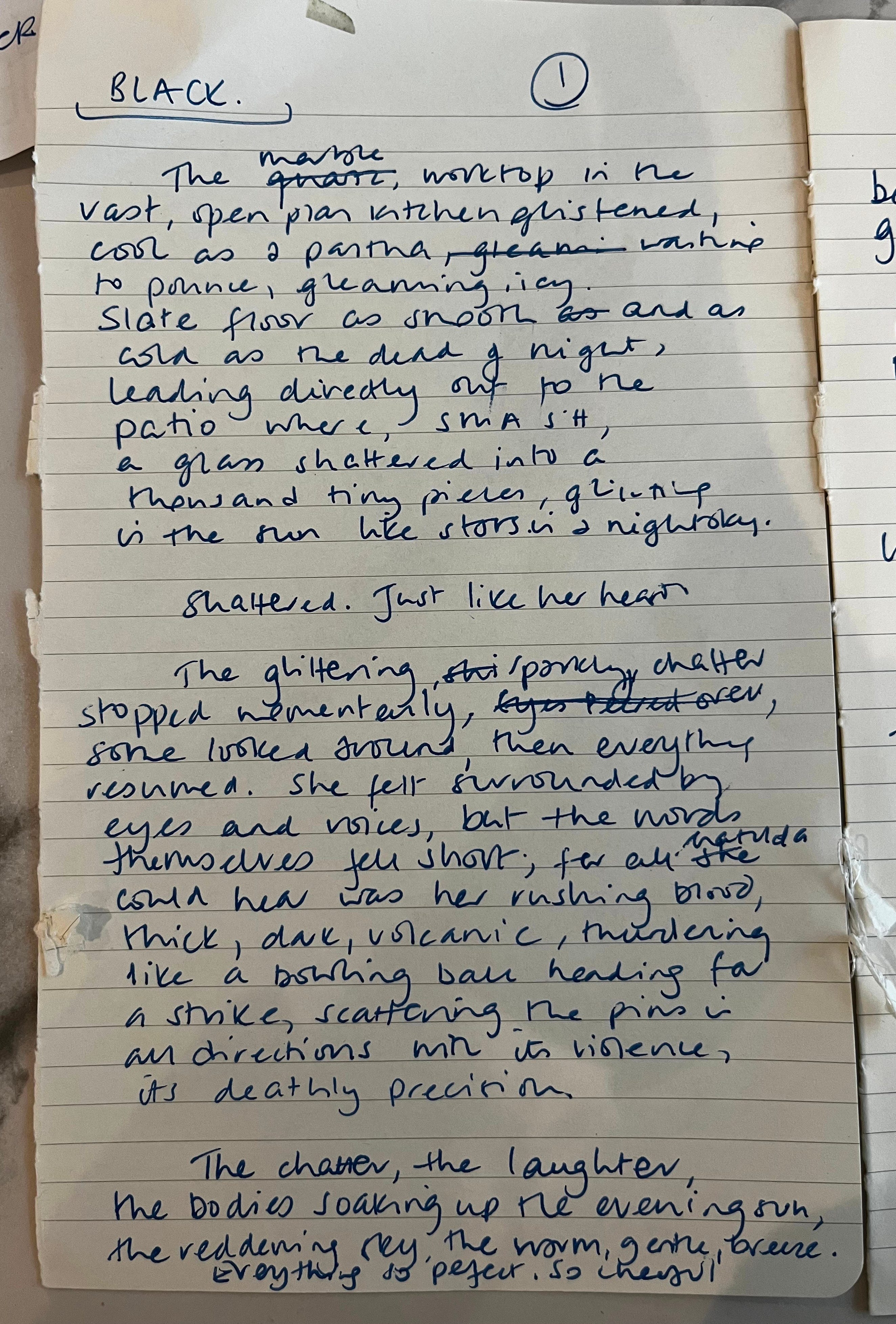
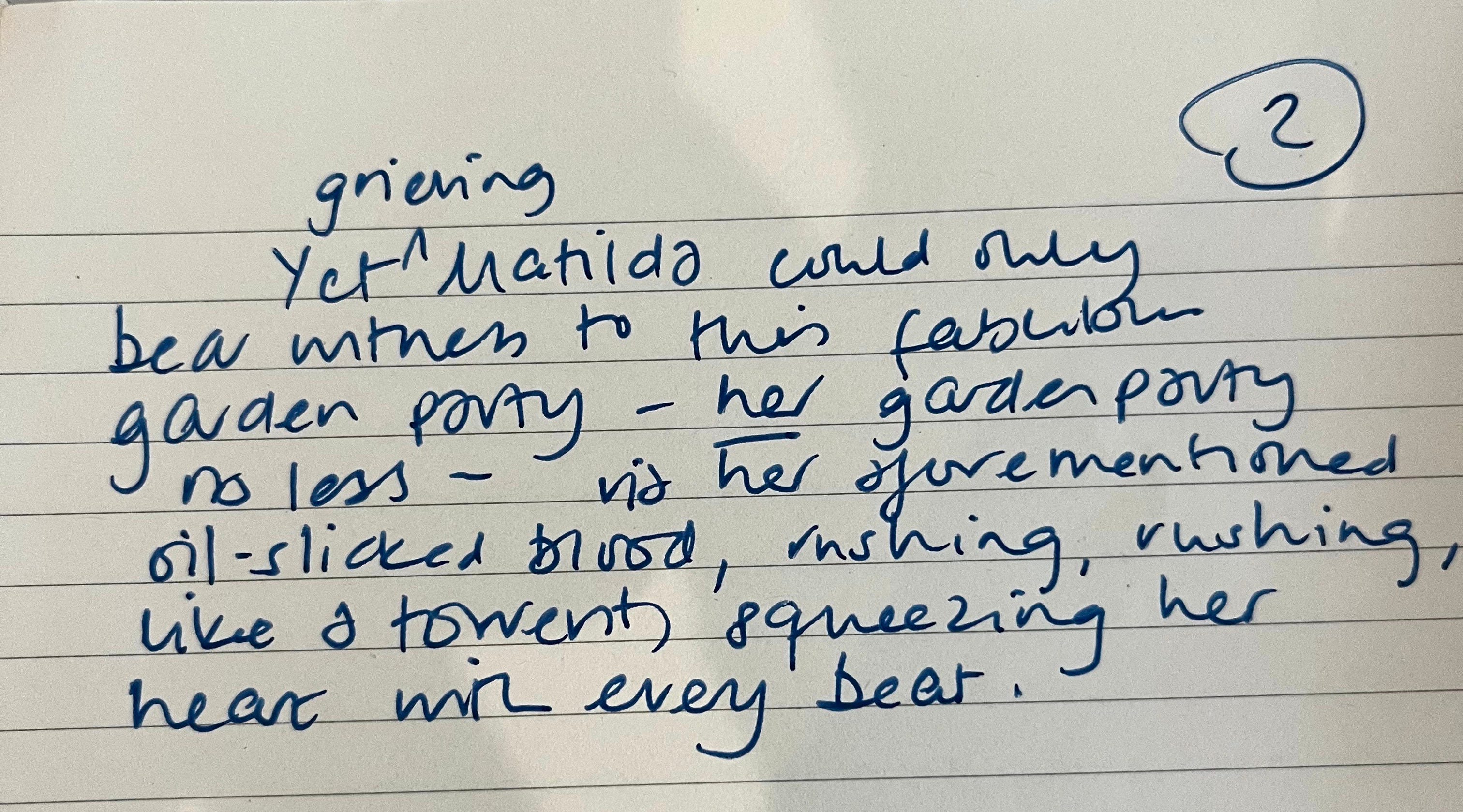
This second one I actually wrote first, but felt it lacked the connection to colour that Geraghty was asking us to convey. I wanted to include it nonetheless.
And so we come to a close.
A pause.
A time to spare a thought to love lost.
I’ll be back later this week with something more light-hearted (I hope).
In the meantime, if you want to try this exercise, I’d love to hear your versions in the comments below.
I leave you with these flowers, purely because flowers bring me such peace and joy and calm. I grew these in my tiny garden last year. The bees loved them. Helichrysum (yes, I know, I’m showing off now)1. Strawflowers to us common folk. Easy to grow. Even easier to dry. Keep their colour for years. Vital Seeds sell UK Grown and open-pollinated seed, which is where I got mine. You can visit their website to read about the importance of growing this sort of seed in your own gardens, as well as how to save the seed from your plants so you can grow again and again.
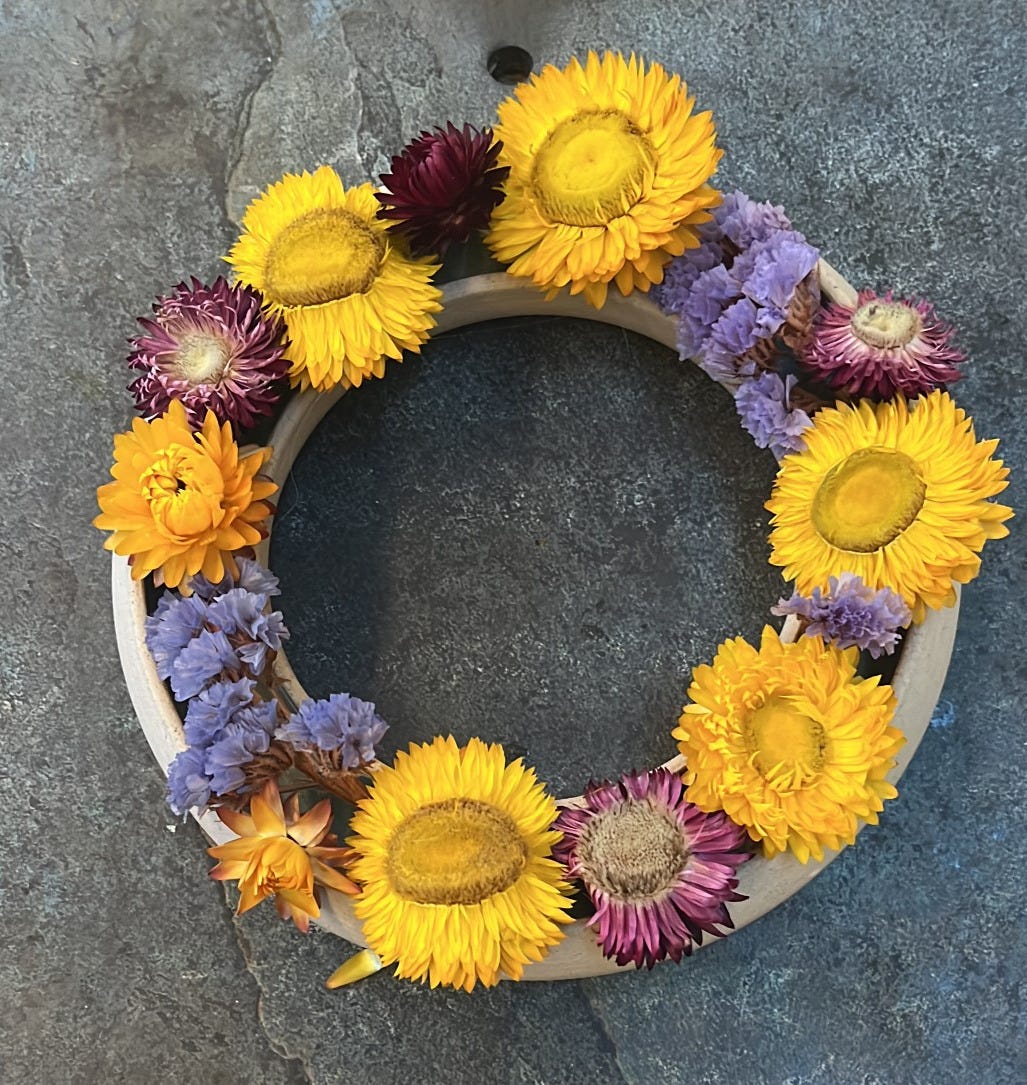
The gardeners amongst you will notice that there is also a bit of Statice in here. Full disclosure: I bought this, and the reason being is that I only like the dried version, so I don’t want it growing my garden. It was grown in Devon though and bought from my local florist.